News
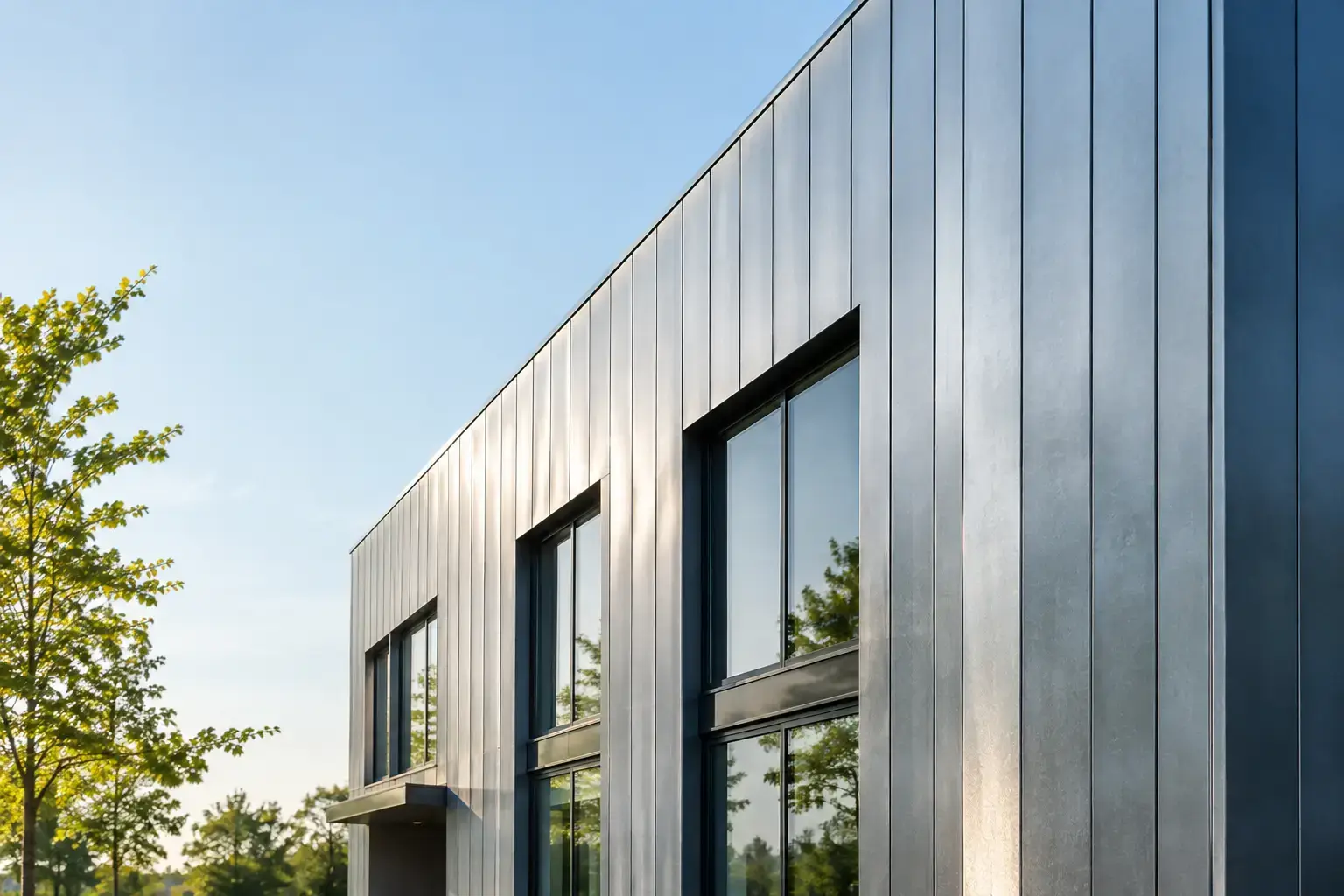
A galvanized finish can give a facade the unmistakable visual character of industrial steel while meeting the discipline required of a contemporary building envelope. For architects and contractors, galvanized steel cladding is not simply a material selection. It is a decision about corrosion exposure, panel fabrication, fire-tested assembly requirements, finish consistency, drainage detailing, and the long-term appearance expected by the owner.
Used correctly, galvanized steel brings a distinctive metallic surface to corporate campuses, hospitality projects, transportation facilities, retail environments, and high-visibility commercial architecture. Used without a clear specification, it can create avoidable questions around staining, cut-edge protection, oil canning, and compatibility with adjacent metals. The difference is determined early, in design development and submittal review.
What Galvanized Steel Cladding Delivers
Galvanized steel is carbon steel protected by a zinc coating. The zinc creates a barrier against corrosion and also provides sacrificial protection when minor damage exposes the underlying steel. For exterior architecture, that protective layer is the foundation of galvanized steel’s appeal, but it is only one part of facade performance.
The material’s visual range is broader than many specifications assume. A bright spangle finish can create a pronounced crystalline pattern and a more expressive industrial identity. A minimized-spangle or smooth galvanized finish presents a quieter, more controlled surface. Prepainted galvanized steel expands the palette further, providing color while retaining the strength and forming characteristics of a steel substrate.
When supplied as a metal skin for composite panels, galvanized steel can combine that visual and structural character with the flatness, fabrication efficiency, and routing capability expected in modern panelized facade systems. This approach is particularly relevant where a project requires large-format visual consistency, shaped features, or coordinated details around openings and building corners.
The zinc coating is not a universal answer
Galvanization improves corrosion resistance, but its performance depends on the environment. Rain-washed elevations generally behave differently from sheltered soffits, recessed entries, parapets, and areas exposed to persistent moisture. Coastal salt, industrial pollutants, deicing salts, and contact with incompatible materials can accelerate corrosion.
Specifications should define the intended exposure conditions rather than treating galvanized steel as a single, all-purpose category. The coating designation, surface treatment, paint system where applicable, and edge treatment should correspond to the project’s location and maintenance expectations. A facade intended for a dry inland climate may need a materially different solution from one facing a marine environment or a heavily salted urban corridor.
Specify Galvanized Steel Cladding as a System
A panel is not a wall assembly. The performance of galvanized steel cladding depends on the relationship between the panel, attachment system, air and water barrier, insulation, cavity, perimeter fire containment, flashings, and substrate. This distinction is essential when the project is subject to fire, wind, water, seismic, or energy-code requirements.
For high-rise and code-sensitive construction, the relevant fire evidence must apply to the proposed wall configuration. A fire-rated core alone does not establish compliance for the complete facade. Project teams should evaluate the applicable testing and engineering pathways, which may include NFPA 285 in the United States, CAN/ULC-S134 in Canada, BS 8414, or EN 13501 classifications in other markets. The exact requirement depends on jurisdiction, building type, wall composition, and authority having jurisdiction.
Alubond supports specification-driven facade programs with fire-rated panel options, metal skins, and technical documentation developed for demanding commercial construction. For projects using galvanized steel skins, the design conversation should extend beyond appearance to the full tested or approved assembly strategy.
Define the face material and panel construction
The term galvanized steel cladding can refer to several different solutions: single-skin sheet, corrugated or profiled metal, insulated metal panels, rainscreen panels, cassette systems, or metal composite material with galvanized steel skins. These options do not perform, fabricate, or install in the same way.
Single-skin galvanized sheet can be economical and visually direct, though it may require additional stiffening, support, and detailing to control waviness. Profiled systems introduce stiffness and a recognizable shadow pattern, making them suitable for industrial and commercial elevations. Composite panels deliver a flatter architectural face and can support precise routing, folding, returns, and module coordination. The appropriate choice depends on facade geometry, desired joint expression, required fire classification, wind loads, budget, and fabrication capability.
The specification should also state whether a natural galvanized appearance, clear-protected finish, or painted finish is intended. “Galvanized” alone is not enough direction for procurement. It does not identify coating mass, spangle expectation, gloss level, color tolerance, protective film requirements, or acceptable visual variation between production lots.
Detail water, movement, and cut edges
Every exterior metal facade should be designed to shed water and allow the wall behind it to manage incidental moisture. Horizontal ledges, unventilated pockets, and reverse laps can hold contaminants and water against the zinc surface. These details shorten the service life of any metal cladding, particularly in exposed or polluted conditions.
Cut edges, penetrations, fastener locations, folds, and panel returns deserve specific attention. While zinc offers sacrificial protection at small exposed areas, repeated wetting, trapped debris, or aggressive environments can overcome that protection. Fabricated panels should preserve the integrity of the face metal, and field modifications should be controlled through approved procedures.
Thermal movement also matters. Long panels expand and contract with seasonal temperature changes. Fixing points, joint dimensions, and panel geometry must accommodate that movement without buckling, fastener distress, or sealant failure. A clean elevation on opening day is not the benchmark. The detail must remain stable after years of thermal cycling and wind loading.
Managing Appearance Expectations
Galvanized steel changes over time. Depending on exposure, the surface may dull, develop a soft gray patina, or show uneven weathering during the early life of the facade. This is often part of the intended aesthetic, but it must be understood by the architect, owner, and contractor before material approval.
Mockups are indispensable when appearance is central to the design. They allow the team to evaluate panel flatness, joint lines, fabrication marks, directionality, surface variation, adjacent materials, and reflected light at a realistic scale. A small hand sample cannot accurately predict the visual effect of a full elevation or the way natural galvanized surfaces will mature across different orientations.
Oil canning should be discussed with the same clarity. It is a visual phenomenon associated with thin sheet metal and can be influenced by coil processing, panel width, forming, thermal movement, installation tolerances, and lighting conditions. It cannot always be eliminated. Panel design, stiffening strategy, and realistic acceptance criteria can reduce the risk of disputes.
Material Compatibility Is a Design Issue
Galvanic corrosion occurs when dissimilar metals are connected in the presence of an electrolyte such as water. Copper runoff onto galvanized steel is a well-known concern because it can accelerate zinc corrosion. Certain fasteners, flashings, sealants, pressure-treated wood products, and cleaning chemicals may also be incompatible with zinc coatings.
The facade specification should identify approved fasteners, isolation materials, sealants, and adjacent flashing metals. It should also coordinate roof drainage so water from incompatible materials does not flow across galvanized surfaces. These are modest decisions in drawings and submittals, yet they carry significant consequences for durability and warranty accountability.
Cleaning requirements should be equally practical. Most exterior facades benefit from periodic inspection and removal of accumulated dirt in sheltered zones. Abrasive pads, highly acidic cleaners, and unapproved chemicals can damage the protective coating or alter the appearance. Maintenance guidance should reflect the actual local environment, not a generic interval copied from an unrelated project.
Procurement Questions That Prevent Field Problems
Before releasing galvanized steel cladding for fabrication, project teams should verify the panel system, coating designation, approved finish sample, fabrication drawings, attachment method, and interface details. They should confirm the fire-performance evidence required for the building and ensure that substitutions do not alter the tested assembly.
Supply planning matters on larger programs. Matching material across phases requires disciplined coil sourcing, finish control, and lot coordination. This becomes especially important when a project uses both natural galvanized surfaces and custom-painted panels, or when the facade combines steel with aluminum, stainless steel, copper, bronze, or glass.
A capable manufacturer and fabricator should provide more than material. They should support the project with technical data, panel limitations, approved fabrication practices, finish information, and documentation aligned with the governing code path. For complex facades, this coordination is a risk-control measure, not an administrative exercise.
Galvanized steel earns its place on ambitious architecture when its character is specified as deliberately as its performance. Define the exposure, select the right panel construction, verify the wall assembly, and build the details around water management and material compatibility. The result is a facade that retains its intended visual authority long after the project leaves the jobsite.
RECENT POSTS

November 21 , 2026

November 19 , 2026

November 17 , 2026

November 15 , 2026

November 13 , 2026

November 11 , 2026

November 9 , 2026

November 7 , 2026

November 5 , 2026

November 3 , 2026

November 1 , 2026

October 30 , 2026

October 28 , 2026

October 26 , 2026

October 24 , 2026

October 22 , 2026

October 20 , 2026

October 18 , 2026

October 16 , 2026

October 14 , 2026

October 12 , 2026

October 10 , 2026

October 8 , 2026

October 6 , 2026

October 4 , 2026

October 2 , 2026

September 30 , 2026

September 28 , 2026

September 26 , 2026

September 24 , 2026

September 22 , 2026

September 20 , 2026

September 18 , 2026

September 16 , 2026

September 14 , 2026

September 12 , 2026

September 10 , 2026

September 8 , 2026

September 6 , 2026

September 4 , 2026

September 2 , 2026

August 31 , 2026

August 29 , 2026

August 27 , 2026

August 25 , 2026

August 23 , 2026

August 21 , 2026

August 19 , 2026

August 17 , 2026

August 15 , 2026

August 13 , 2026

August 12 , 2026

August 12 , 2026

August 12 , 2026

August 12 , 2026

August 12 , 2026

August 12 , 2026

August 12 , 2026

August 12 , 2026

November 2 , 2022

April 26 , 2022

