News
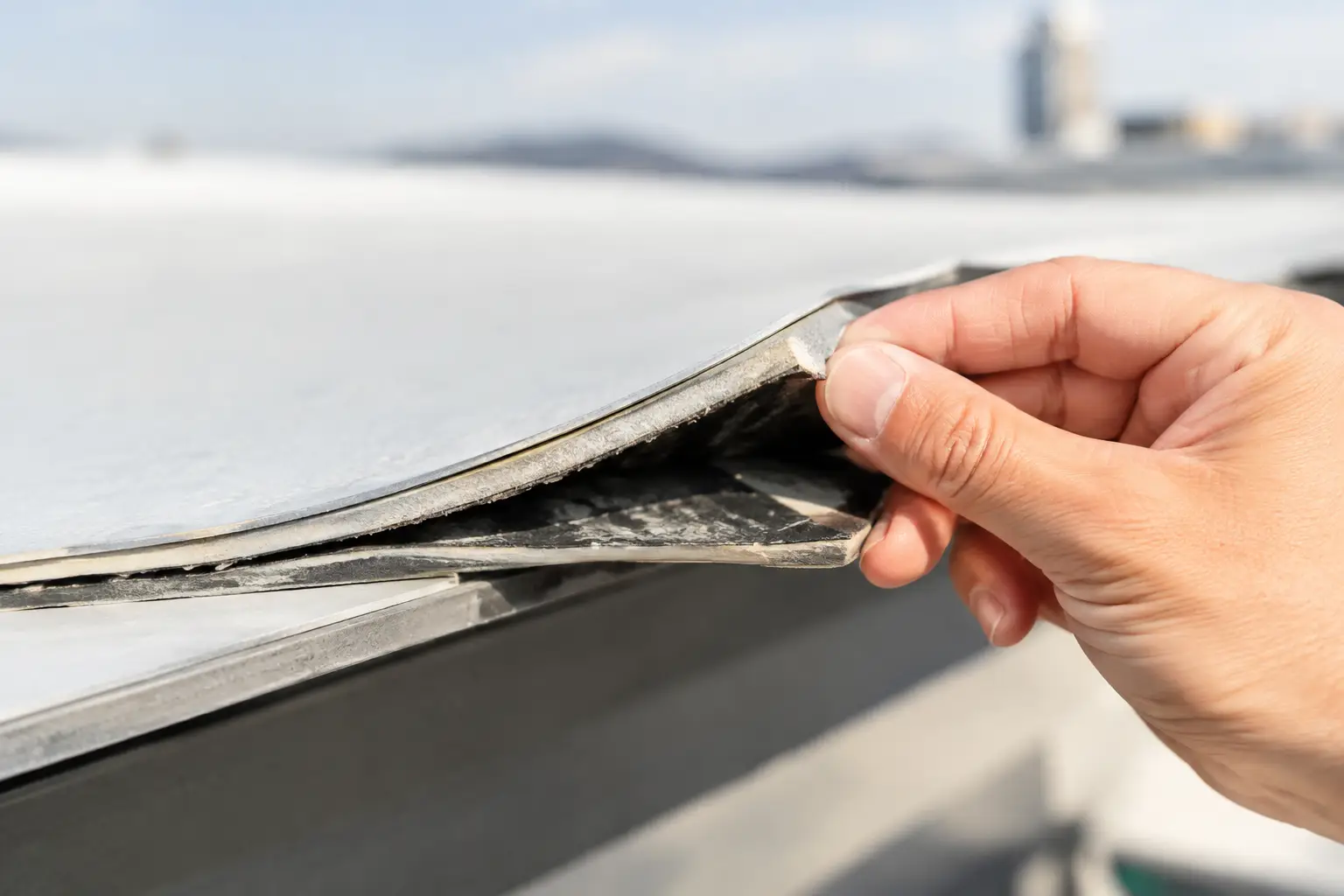
ACP delamination is not a cosmetic defect to dismiss during a facade walk-through. When the aluminum skin begins separating from the composite core, the panel can lose its intended flatness, visual integrity, and ability to perform predictably within the cladding system. For architects, contractors, fabricators, and owners, early recognition matters because the visible symptom may represent a manufacturing, fabrication, installation, or environmental exposure issue that needs to be addressed at the system level.
What ACP Delamination Means in a Facade
Aluminum composite panel construction depends on a permanent bond between aluminum face sheets and a core material. That core may be polyethylene in certain panel classifications or a mineral-filled, fire-retardant formulation in fire-rated products. Delamination occurs when this bond loses continuity over part or all of a panel.
The condition can appear as bubbling, blistering, oil-canning that was not present at installation, local waviness, lifted corners, or a hollow sound when the panel surface is carefully tapped. In advanced cases, the aluminum skin may visibly pull away from the core. These signs should be differentiated from ordinary reflected distortion, substrate irregularity, or panel deflection caused by inadequate support. The distinction is critical: a flatness concern can often be traced to fabrication tolerances or framing alignment, while true delamination is a loss of composite-panel integrity.
A panel is not an isolated decorative layer. It is part of a building-envelope assembly exposed to wind pressure, solar heat gain, moisture, freeze-thaw cycling, vibration, and maintenance activity. Once bond failure begins, those exposures can intensify the damage.
Why ACP Delamination Happens
There is rarely one universal cause. A disciplined investigation considers the panel product, the fabrication method, the installation details, and the project environment before assigning responsibility.
Bonding Quality and Manufacturing Control
The bond between skin and core is established during controlled manufacturing processes involving heat, pressure, adhesive chemistry, and coil preparation. Variability in any of these conditions can reduce bond strength. Contamination on the aluminum coil, inconsistent adhesive application, inadequate curing, or poor control of core composition can create weak areas that may not become apparent until panels are exposed to service conditions.
This is why material selection should extend beyond a finish sample and nominal panel thickness. Manufacturers with direct control over core production, bonding adhesives, color-coated coils, and paint systems can manage the interfaces that determine panel consistency. Alubond’s vertically integrated approach is designed around that level of control, particularly for specification-driven facades where appearance, rated-panel performance, and dependable supply must align.
Thermal Movement and Environmental Cycling
Aluminum expands and contracts with temperature change. Dark colors, metallic finishes, and south- or west-facing elevations can experience substantial surface-temperature swings. If panel fabrication, attachment, or joint design restricts normal movement, stress can accumulate at folds, returns, fastener points, and bonded areas.
Thermal stress does not automatically cause ACP delamination. Properly manufactured panels and correctly engineered systems are intended to accommodate ordinary environmental movement. Problems arise when restrictive details, undersized joints, incompatible sealants, or excessive panel dimensions leave no practical allowance for movement. The risk depends on climate, orientation, color, system geometry, and the building’s structural behavior.
Water Intrusion and Edge Exposure
Composite panels are not a substitute for a complete water-management strategy. Water entering through failed sealant joints, open edges, damaged flashings, or poorly detailed penetrations can reach areas that were never intended for prolonged wet exposure. Repeated moisture exposure may affect susceptible interfaces, particularly when it is combined with trapped contaminants, freeze-thaw cycles, or inadequate drainage and ventilation.
Panel edges deserve particular attention. Cut edges, routed returns, penetrations, and field-modified openings must be detailed and executed in accordance with the panel manufacturer’s fabrication requirements. A visually clean installation can still conceal a drainage path that directs water behind the cladding or holds it against vulnerable details.
Fabrication and Installation Damage
Improper routing, folding, drilling, or handling can introduce localized stress that later presents as a bond failure. Panels stored on uneven surfaces, dragged during unloading, over-clamped during fabrication, or bent beyond approved limits may be damaged before installation. Protective film left on for too long can also create surface-related concerns, especially in high-heat conditions, although it should not be confused with core-to-skin delamination.
Field installation can add further risk. Over-tightened fasteners, uneven rails, excessive point loading, incompatible tapes or adhesives, and poorly supported returns can distort the panel and concentrate stress. Fabricators should use the approved system details rather than adapting attachment methods in the field without engineering review.
How to Investigate Suspected ACP Delamination
A credible assessment starts with documentation, not assumptions. Record the affected elevation, panel dimensions, finish and color, installation date, exposure direction, and the pattern of the condition. Is it limited to a single production lot, a group of panels near a transition, or a heat-intensive elevation? Does it occur near folds, fasteners, joints, or water-entry points?
The investigation should then compare observed conditions with the approved submittals, fabrication drawings, installation records, and panel data. Review the wall assembly as well as the panel itself. An apparent panel failure adjacent to a parapet, window opening, expansion joint, or roof transition may point to water-management or movement issues outside the panel.
Useful field actions include visual mapping, carefully documented tapping tests, moisture evaluation where the assembly permits, and review of panel support alignment. Destructive sampling should be controlled and limited to representative locations. Removing a panel without preserving the surrounding details can eliminate evidence needed to identify the root cause.
Independent facade consultants, qualified installers, and the material manufacturer should be involved early when multiple panels are affected or when the condition appears in a high-wind, high-occupancy, or code-sensitive area. The correct remedy may range from local panel replacement to a broader system correction. Replacing visible panels without resolving water intrusion, restrained movement, or support deficiencies can recreate the same condition.
Preventing ACP Delamination Before Construction
Prevention begins at specification. Define the panel classification appropriate to the building type, jurisdiction, occupancy, height, and tested wall assembly. Fire performance is not interchangeable with bond performance, but both belong in a disciplined material-selection process. Where required, confirm compatibility with the applicable assembly testing and code pathway, including NFPA 285, EN 13501, BS 8414, or CAN/ULC-S134 as relevant to the project.
The specification should identify approved panel thickness, skin thickness, core classification, finish system, fabrication limits, joint widths, attachment system, and acceptable substitutions. It should also require technical data that addresses storage, handling, routing, folding, thermal movement, cleaning, and protective-film removal. Vague language such as “or approved equal” can introduce avoidable variability if the alternate product has different bonding construction, fire classification, or fabrication requirements.
Mockups are particularly valuable for complex elevations. They allow the project team to review panel flatness, joint alignment, corner treatment, drainage, flashing interfaces, support spacing, and color behavior under actual light. For large projects, a mockup should be treated as a construction-quality benchmark, not merely a design presentation.
During procurement, verify that the supplied product matches the approved sample and submittal. During fabrication, protect panels from excessive heat, impact, and unsupported storage. During installation, maintain tolerances in the support system and preserve designed drainage and ventilation paths. These controls are straightforward, but they require coordination among the panel supplier, fabricator, installer, and envelope consultant.
Long-Term Facade Stewardship
Periodic facade review helps identify changing conditions before they become major replacement scopes. Owners should watch for isolated bulges, loose edges, new waviness, staining around joints, failed sealants, damaged flashings, and panels that no longer align with adjacent modules. Cleaning and maintenance teams should avoid aggressive tools, solvents, or pressure practices that conflict with the finish manufacturer’s recommendations.
When a panel concern is found, preserve records and investigate the assembly with the same rigor applied during construction. A high-performance facade depends on more than an attractive metal surface. It depends on verified material quality, engineered movement, controlled fabrication, and disciplined installation.
The best response to ACP delamination is to treat it as an envelope-performance signal. Resolve the cause behind the symptom, specify materials with traceable quality control, and protect the details that keep the entire facade performing as designed.
RECENT POSTS

September 18 , 2026

September 16 , 2026

September 14 , 2026

September 12 , 2026

September 10 , 2026

September 8 , 2026

September 6 , 2026

September 4 , 2026

September 2 , 2026

August 31 , 2026

August 29 , 2026

August 27 , 2026

August 25 , 2026

August 23 , 2026

August 21 , 2026

August 19 , 2026

August 17 , 2026

August 15 , 2026

August 13 , 2026

August 12 , 2026

August 12 , 2026

August 12 , 2026

August 12 , 2026

August 12 , 2026

August 12 , 2026

August 12 , 2026

August 12 , 2026

November 2 , 2022

April 26 , 2022

