News
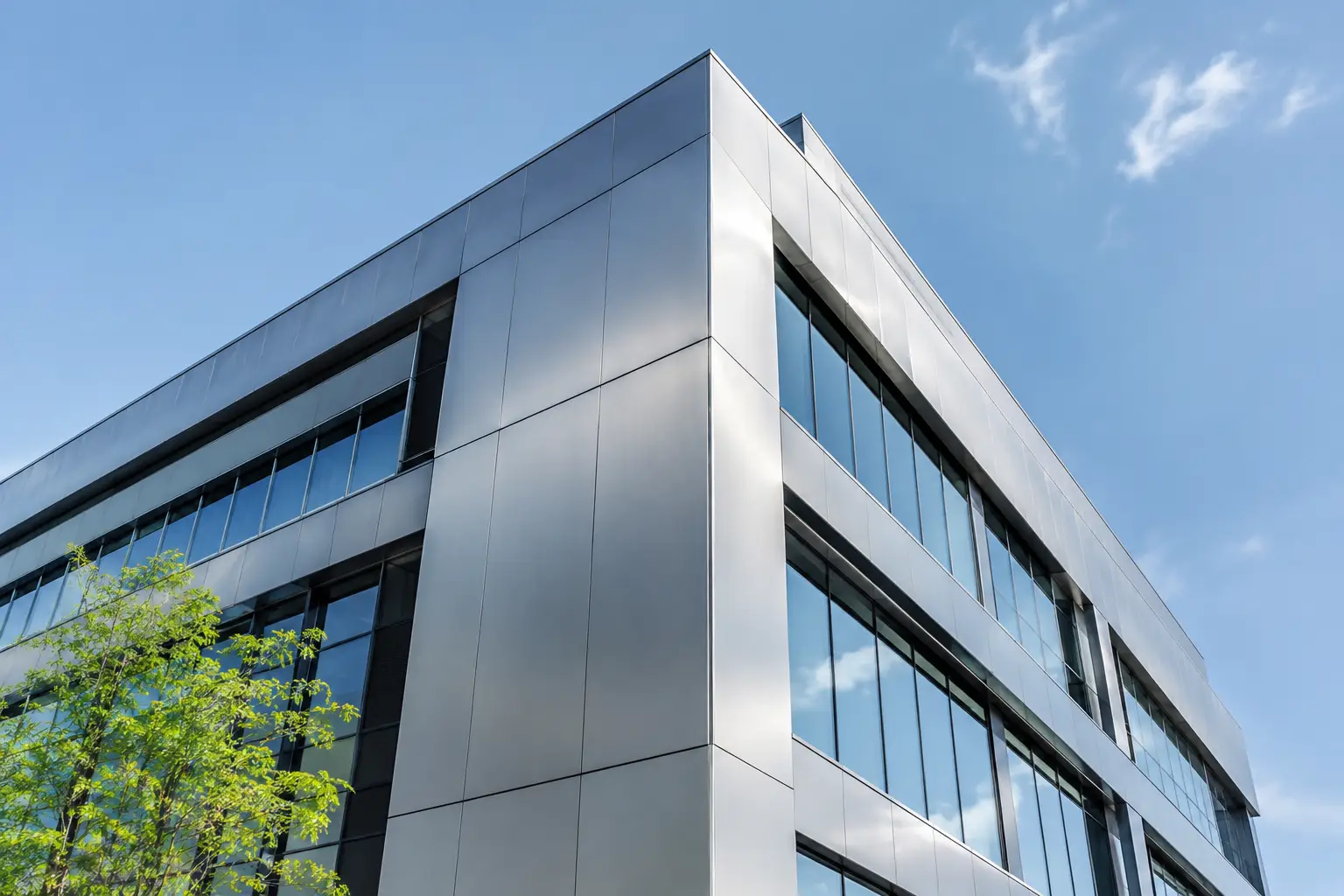
A facade can appear flawless at handover and still be on a path to early failure. Salt-laden air, industrial pollutants, trapped moisture, dissimilar metals, and poor drainage can begin degrading exterior materials long before visible staining or coating failure occurs. Corrosion resistant facades are therefore not a finish-selection exercise alone. They are a building-envelope strategy that must account for material chemistry, panel construction, system detailing, fabrication quality, and the actual exposure conditions at the project site.
For high-rise, hospitality, transportation, commercial, and coastal developments, the consequences are substantial. A facade that loses color consistency, develops edge corrosion, stains adjacent surfaces, or requires premature replacement creates operational disruption and damages the asset’s long-term value. The right cladding specification protects both architectural intent and lifecycle performance.
What Makes a Facade Corrosion Resistant?
Corrosion resistance is the ability of a facade material and its supporting system to withstand deterioration caused by its environment. In exterior cladding, corrosion rarely has one cause. It is commonly the combined result of water exposure, contaminants, ultraviolet radiation, elevated temperature cycles, mechanical damage, and incompatible material pairings.
Aluminum is widely selected for facade applications because it naturally forms a thin oxide layer that helps protect the underlying metal. That protection is effective, but it is not unlimited. Chlorides in marine environments, acidic pollutants in urban and industrial zones, standing water, damaged coatings, and poor interface detailing can all reduce long-term performance.
The panel itself is only one part of the equation. Fasteners, brackets, rails, sealants, flashings, cut edges, joints, and drainage paths must work as a coordinated assembly. A premium panel installed within a system that holds water or creates galvanic interaction can still produce avoidable failures.
Environmental Exposure Should Drive Material Selection
A facade in an inland office district faces a different corrosion risk than a resort overlooking saltwater or a logistics facility near chemical processing operations. Specifications should reflect that reality rather than applying one material schedule to every elevation and project location.
Coastal and marine conditions
Coastal buildings face airborne chlorides that can deposit on panel surfaces and enter joints. Wind-driven rain carries salts into areas that may not be routinely washed by natural rainfall. Soffits, recessed zones, parapets, and locations behind architectural screens require particular scrutiny because deposits can accumulate there.
For these projects, designers should prioritize exterior-grade coating systems, carefully selected aluminum alloys, compatible stainless steel fasteners, and details that allow assemblies to dry. Regular cleaning may also be part of the owner’s maintenance plan. Corrosion resistance improves when salt deposits are removed before they remain in contact with the finish for extended periods.
Urban and industrial exposure
Dense urban areas may expose facades to soot, vehicle emissions, acidic contaminants, and particulate matter. Industrial sites can introduce more aggressive airborne chemicals. These pollutants can retain moisture on exterior surfaces, accelerate coating degradation, and leave staining that is difficult to remove if maintenance is delayed.
A high-performance fluoropolymer coating can provide better long-term color and weathering performance than a basic architectural coating in demanding exposures. However, coating selection should be reviewed alongside cleaning access, building geometry, orientation, and warranty requirements. A coating is not a substitute for sound panel and drainage design.
High-humidity and rainfall zones
In humid climates, the principal concern is often persistent moisture rather than salt. Condensation behind cladding, blocked weep paths, unsealed penetrations, and improper flashing can keep substrates wet for long periods. This is why rainscreen principles matter: manage water that enters the cavity, ventilate the assembly, and provide clear drainage routes.
Material Choices That Affect Long-Term Performance
Aluminum composite material, solid aluminum panels, stainless steel, galvanized steel, copper, bronze, and titanium each bring distinct aesthetic and performance characteristics. The strongest choice depends on the exposure zone, desired appearance, budget, forming requirements, and facade system design.
Aluminum composite panels offer a flat, lightweight cladding solution with broad color and finish flexibility. When specified with durable exterior coatings and installed within properly engineered systems, they can support long-term architectural performance across a wide range of building types. For code-driven projects, panel selection must also align with the required fire classification and tested wall-assembly requirements.
Solid aluminum panels can be appropriate where enhanced dent resistance, deeper fabrication, or a more substantial metal expression is desired. Stainless steel offers excellent corrosion resistance in many demanding applications, but grade selection remains critical, particularly in chloride-rich environments. Galvanized steel requires careful protection at cut edges and penetrations. Copper, bronze, and titanium provide distinctive visual character, yet their interaction with adjoining materials must be detailed with precision.
No metal is universally maintenance-free. The practical question is whether the selected material, coating, and assembly are appropriate for the expected exposure and can be maintained by the building owner.
Coatings Protect More Than Color
A facade finish performs both visual and protective work. It must maintain color, gloss, adhesion, and surface integrity under ultraviolet exposure, moisture, thermal movement, and routine cleaning. High-quality coil-coated finishes create a controlled factory-applied surface that supports consistency across large facade areas.
For complex projects, the specification should define more than a color name. It should address coating type, film thickness, gloss range, color tolerance, exterior weathering expectations, and any project-specific testing requirements. Metallic, textured, wood-look, stone-look, and custom finishes may have different maintenance and repair considerations than standard solid colors.
Edge conditions deserve equal attention. Fabrication can expose metal at folds, cutouts, routed returns, and penetrations. A qualified fabricator should follow the panel manufacturer’s fabrication guidance, protect finished faces during processing, and avoid practices that damage coating integrity. Field modifications should be minimized and controlled.
Detail the System to Prevent Water and Galvanic Corrosion
Water management is one of the clearest dividing lines between a facade built for appearance and one built for durability. Horizontal ledges, poorly sloped flashings, blocked drainage channels, and tightly sealed cavities can trap water where it does the most damage. A properly designed drained and ventilated facade allows incidental moisture to exit and helps components dry.
Galvanic corrosion is another frequent specification issue. It occurs when dissimilar metals are electrically connected in the presence of an electrolyte such as water. The more active metal may corrode at an accelerated rate. Aluminum panels paired with incompatible fasteners, brackets, or flashing materials need separation through appropriate isolators, tapes, coatings, or nonconductive components.
The design team should also assess thermal movement. Panels and support systems expand and contract at different rates. If joints are too restrictive, movement can damage finishes, distort panel geometry, or open pathways for water. Correct joint design protects both corrosion performance and visual alignment.
Fire Performance and Corrosion Performance Must Work Together
For many commercial projects, facade selection cannot be separated from fire compliance. A corrosion-resistant exterior panel may be technically capable in a given climate yet unsuitable if its core classification or wall assembly does not meet the governing code and project requirements.
This is particularly relevant for multistory construction, high-occupancy buildings, healthcare facilities, hotels, and transportation infrastructure. Architects and contractors should evaluate panel fire classification, insulation, air and water barriers, cavity conditions, attachments, and full wall-assembly performance as a complete system. Referenced testing may include NFPA 285, EN 13501, BS 8414, or CAN/ULC-S134, depending on jurisdiction and project scope.
Alubond supports this integrated approach through a portfolio of FR-A1, FR-A2, FR-B1, and FR-B2 panel options, along with solid aluminum and specialty metal solutions. The objective is not simply to select a panel with an attractive surface, but to build a facade package that responds to fire, weather, fabrication, supply, and design requirements together.
Specify for the Full Service Life
The most successful specifications make performance measurable. They identify the project environment, approved material types, coating requirements, compatible accessories, fabrication limitations, cleaning expectations, and documentation required before installation. This reduces ambiguity between architect, consultant, contractor, fabricator, and supplier.
Procurement teams should also consider production capability and finish consistency across phases. Large developments may require panels over extended schedules, replacement quantities, or multiple elevations with custom colors. A manufacturer with integrated control over coated coils, adhesives, mineral cores, and panel production can provide greater confidence in continuity and quality control.
Before final release, review mockups under real lighting conditions, inspect joint and flashing details, confirm material compatibility, and establish responsibilities for cleaning and inspection after occupancy. These steps are modest compared with the cost of correcting a facade once access equipment and tenant operations are in place.
A corrosion-resistant facade is built through disciplined decisions made long before the first panel is installed. When material selection, coatings, fire performance, fabrication, and moisture management are coordinated from the start, the building retains the appearance and protection its architecture was designed to deliver.
RECENT POSTS

October 12 , 2026

October 10 , 2026

October 8 , 2026

October 6 , 2026

October 4 , 2026

October 2 , 2026

September 30 , 2026

September 28 , 2026

September 26 , 2026

September 24 , 2026

September 22 , 2026

September 20 , 2026

September 18 , 2026

September 16 , 2026

September 14 , 2026

September 12 , 2026

September 10 , 2026

September 8 , 2026

September 6 , 2026

September 4 , 2026

September 2 , 2026

August 31 , 2026

August 29 , 2026

August 27 , 2026

August 25 , 2026

August 23 , 2026

August 21 , 2026

August 19 , 2026

August 17 , 2026

August 15 , 2026

August 13 , 2026

August 12 , 2026

August 12 , 2026

August 12 , 2026

August 12 , 2026

August 12 , 2026

August 12 , 2026

August 12 , 2026

August 12 , 2026

November 2 , 2022

April 26 , 2022

