News
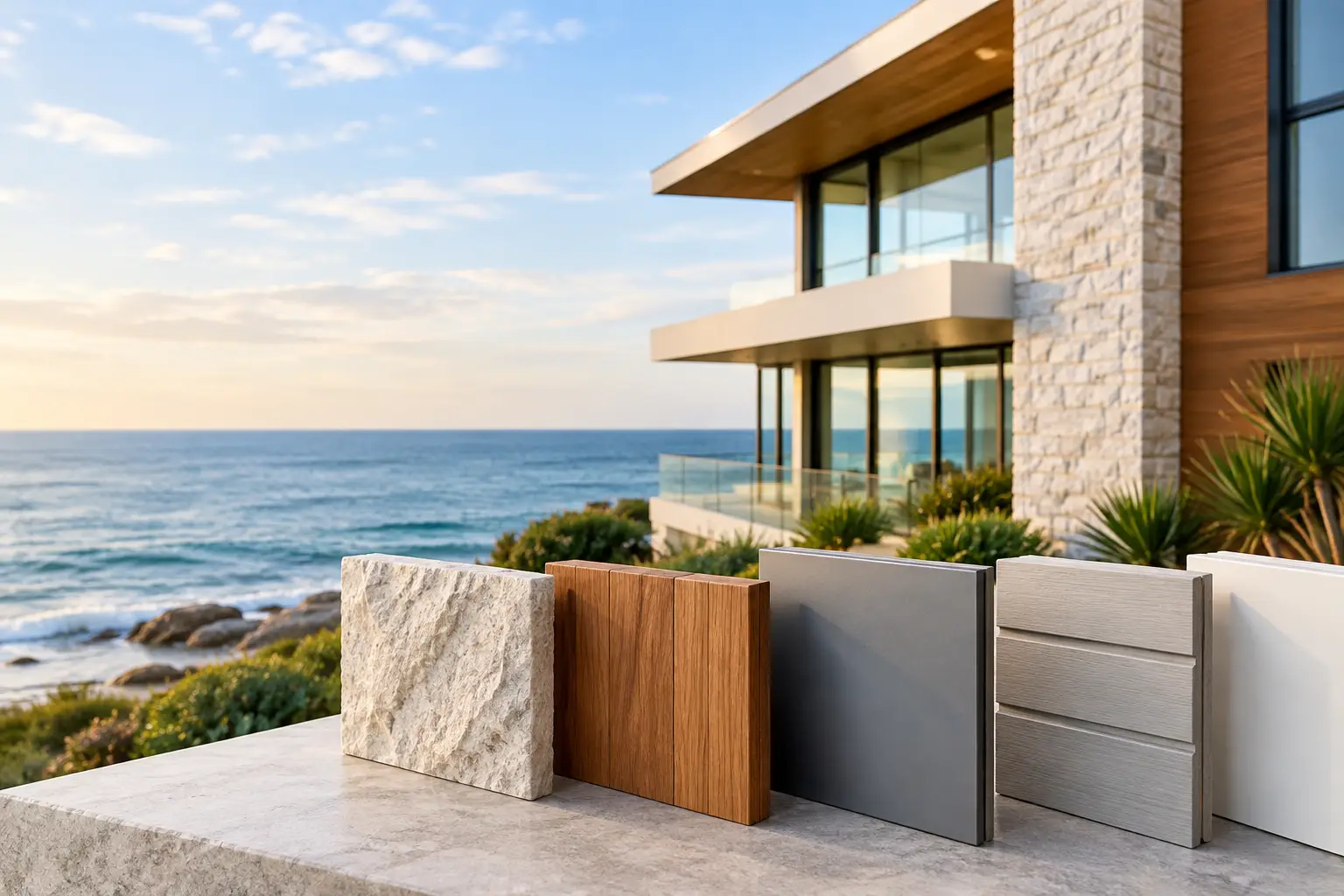
Salt-laden air does not wait for a building to age. It begins working at cut edges, fasteners, drainage paths, sealant joints, and poorly specified panel systems from the first exposure cycle. Selecting the best facade materials for coastal projects therefore requires more than choosing a finish that looks appropriate beside the water. It requires an engineered envelope strategy that accounts for chloride corrosion, wind pressure, moisture movement, UV exposure, fire performance, and the realities of long-term access and maintenance.
For high-rise residential towers, hospitality developments, airports, commercial centers, and waterfront mixed-use buildings, facade selection should begin with the project environment and wall assembly. A material can perform exceptionally in isolation yet fail prematurely when paired with incompatible subframing, exposed untreated edges, unsuitable fasteners, or insufficient cavity ventilation.
What Coastal Exposure Demands From a Facade
Coastal conditions vary significantly. A protected inland building near the shoreline faces a different exposure profile than an oceanfront tower subject to direct salt spray and hurricane-force winds. The distance from the water matters, but so do prevailing winds, building height, orientation, rainfall, airborne pollutants, and local temperature cycles.
Chlorides are the central durability concern. Salt particles settle on exterior surfaces, absorb moisture, and create conductive films that accelerate corrosion. Horizontal ledges, panel returns, joints, and shaded areas can retain deposits longer than washed vertical faces. Wind-driven rain can also force water into joints and cavities, making drainage design as important as the visible cladding surface.
The facade must also resist movement. Coastal structures experience elevated wind loads and repeated pressure cycling. Panels, rails, anchors, fasteners, and attachment details must be engineered for the specific project, not selected solely from a generic standard detail. Where fire regulations apply, the complete wall assembly must also meet applicable code requirements and project-specific test criteria.
Best Facade Materials for Coastal Buildings
No single material is correct for every shoreline project. The best choice depends on exposure severity, desired visual language, building height, fire strategy, budget, and maintenance plan. The strongest specifications align the cladding material with compatible support components and tested system performance.
Aluminum Composite and Metal Composite Panels
Fire-rated aluminum composite panels and metal composite materials are widely specified for coastal commercial architecture because they combine low weight, flatness, design flexibility, and efficient fabrication. Their performance depends on the quality of the aluminum skins, coating system, core classification, edge treatment, fabrication practice, and installation design.
High-performance fluoropolymer finishes are a strong option where UV stability and color retention are priorities. They support a broad range of solid colors, metallic effects, custom-painted finishes, and architectural textures while providing a surface that can be routinely cleaned to remove salt deposits. For highly exposed conditions, project teams should evaluate coating warranties, pretreatment quality, and the suitability of the selected finish for the actual environmental category.
For code-conscious projects, panel fire classification is not interchangeable with wall-assembly compliance. A fire-rated panel may be an essential component, but it does not independently establish that a complete exterior wall meets the requirements of NFPA 285, CAN/ULC-S134, BS 8414, EN 13501, or local code provisions. The specified system should be reviewed as an assembly, including insulation, air and water barrier, cavity configuration, attachment method, and substrate.
Solid Aluminum Panels
Solid aluminum panels are a highly durable choice for demanding coastal zones, especially where deep forming, perforation, rainscreen detailing, or heavy-duty impact resistance is required. With an appropriate alloy, pretreatment, and exterior-grade coating, solid aluminum offers excellent corrosion resistance and can be fabricated into complex profiles, soffits, screens, column covers, and custom facade elements.
Its principal trade-off is cost and weight. Solid aluminum can require more material and more substantial support design than composite panel solutions. Yet for podiums, marine-facing elevations, transportation facilities, and architectural elements exposed to direct weathering, its long service life and repairability can justify the investment.
Stainless Steel
Stainless steel provides a distinctive, premium architectural expression and can deliver excellent corrosion resistance when the correct grade and finish are specified. It is particularly effective for feature facades, entrance portals, canopies, and high-traffic areas where impact resistance matters.
Coastal specifications must be precise. Not all stainless steel grades perform equally in chloride-rich environments, and surface contamination can compromise appearance and corrosion resistance. Grade selection, surface finish, drainage, avoidance of crevices, and isolation from dissimilar metals all deserve attention. Stainless steel is not a maintenance-free material. Regular washing remains necessary, especially in sheltered zones where rain does not naturally remove deposits.
Copper, Bronze, and Other Specialty Metals
Copper, bronze, titanium, and other specialty metal skins can create landmark facades with depth and character that conventional painted finishes cannot duplicate. These materials are often selected for luxury hospitality, cultural, civic, and corporate developments where the facade is intended to evolve over time.
Their visual change is part of the specification, not an afterthought. Patina development can vary across elevations based on runoff, salt exposure, sun, and detailing. Runoff staining on adjacent materials must be anticipated, and metal compatibility must be carefully managed. Titanium offers exceptional corrosion resistance but carries a substantially higher initial cost. Copper and bronze require realistic owner expectations regarding color evolution and maintenance.
Fiber Cement, Terracotta, and Other Rainscreen Options
Fiber cement and terracotta can perform well in coastal rainscreen applications, offering noncombustible or limited-combustibility options depending on the product and system. Their visual character suits projects seeking mineral, masonry, or natural-texture aesthetics.
However, these materials demand careful attention to attachment design, panel dimensions, edge durability, and impact resistance. Terracotta systems may involve greater weight and more complex support requirements. Fiber cement can require disciplined handling and detailing to prevent moisture-related staining or edge damage. In severe wind regions, system testing and engineering are central to selection.
Coastal Performance Is Won in the Details
The visible cladding material is only one part of the envelope. Many coastal facade failures originate at interfaces: a carbon-steel fastener behind an aluminum panel, unsealed cut edges, blocked drainage channels, inadequate flashing, or incompatible sealants.
Specify corrosion-resistant fasteners and attachment components appropriate to the local environment. Where dissimilar metals meet, use isolation methods that limit galvanic corrosion. Provide drained and ventilated cavities, clear water-management paths, and sufficient joint design for thermal movement. At panel penetrations, coordinate gaskets, sealants, flashings, and attachment hardware as a single system rather than as separate trades.
Wind engineering also requires more than confirming panel thickness. The design team should account for corner zones, parapets, soffits, canopies, and other areas where suction pressures can exceed field-of-wall loads. Testing, calculations, and fabrication details should reflect the project’s governing wind criteria and local code requirements.
How to Select the Right System
A practical coastal facade specification starts with exposure mapping. Identify elevations subject to direct salt spray, high wind, shaded moisture retention, or concentrated runoff. The most exposed zones may require a different panel finish, fastening strategy, or material choice than protected elevations.
Next, establish performance priorities early: required fire classification, wall-assembly testing, wind-load criteria, color and gloss retention, thermal movement, impact resistance, maintenance access, and anticipated service life. This prevents design intent from being separated from technical requirements during value engineering.
Finally, evaluate supplier capability beyond the panel sample. Large, specification-driven projects benefit from manufacturers that can control core composition, bonding, coil coating, paint development, fabrication support, technical documentation, and supply continuity. Alubond’s integrated production capabilities, including fire-retardant mineral cores, coated coils, custom finishes, and rated panel options, support this level of coordinated facade delivery for projects across global coastal markets.
Maintenance Should Be Designed Into the Project
Even the best facade materials for coastal environments need a documented maintenance plan. Periodic fresh-water washing removes accumulated chlorides before they can concentrate at joints and sheltered surfaces. Inspection programs should focus on sealants, flashings, drainage paths, fasteners, panel alignment, coating damage, and signs of staining or corrosion.
Maintenance frequency depends on exposure. A sheltered facade may need routine cleaning at longer intervals, while an oceanfront elevation facing prevailing winds may require more frequent attention. Building owners should also retain finish records, repair procedures, and approved touch-up materials so minor damage can be addressed before it expands.
A coastal facade should be specified to age with control, not merely to look impressive at handover. When material selection, fire compliance, wind engineering, drainage, finish technology, and maintenance planning are coordinated from the first design package, the result is an exterior built to hold its performance and architectural presence against the shoreline.
RECENT POSTS

October 24 , 2026

October 22 , 2026

October 20 , 2026

October 18 , 2026

October 16 , 2026

October 14 , 2026

October 12 , 2026

October 10 , 2026

October 8 , 2026

October 6 , 2026

October 4 , 2026

October 2 , 2026

September 30 , 2026

September 28 , 2026

September 26 , 2026

September 24 , 2026

September 22 , 2026

September 20 , 2026

September 18 , 2026

September 16 , 2026

September 14 , 2026

September 12 , 2026

September 10 , 2026

September 8 , 2026

September 6 , 2026

September 4 , 2026

September 2 , 2026

August 31 , 2026

August 29 , 2026

August 27 , 2026

August 25 , 2026

August 23 , 2026

August 21 , 2026

August 19 , 2026

August 17 , 2026

August 15 , 2026

August 13 , 2026

August 12 , 2026

August 12 , 2026

August 12 , 2026

August 12 , 2026

August 12 , 2026

August 12 , 2026

August 12 , 2026

August 12 , 2026

November 2 , 2022

April 26 , 2022

