News
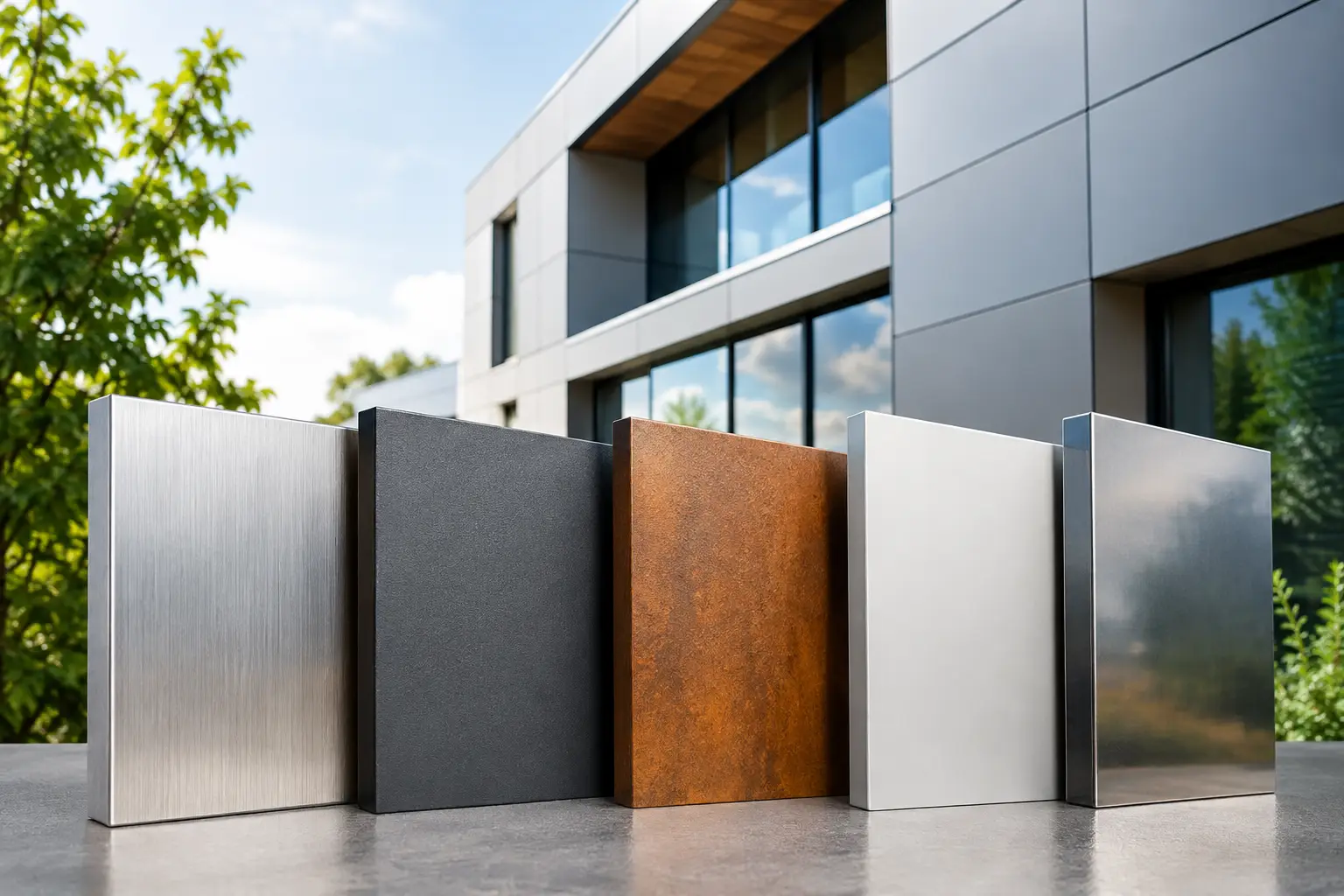
A facade can look flawless at handover and begin showing corrosion-related staining, pitting, or edge deterioration long before its intended service life if the material selection ignores the local exposure. When project teams ask which panels resist corrosion, the correct answer is not a single product name. It is a specification decision that combines metal type, coating system, panel construction, attachment details, maintenance access, and the building’s actual environment.
For airports, towers, hotels, waterfront developments, and industrial facilities, corrosion resistance must be evaluated as an envelope requirement rather than a cosmetic preference. A premium finish cannot compensate for trapped moisture, incompatible fasteners, unsealed cut edges, or a panel installed in a severe coastal zone without the appropriate alloy and coating.
Which Panels Resist Corrosion in Exterior Use?
Aluminum panels, aluminum composite material panels, stainless steel panels, copper panels, bronze panels, and titanium panels can all deliver strong corrosion performance. Their suitability varies substantially by climate, facade geometry, pollution level, and proximity to saltwater.
Pre-finished aluminum composite panels are widely specified because aluminum naturally forms a protective oxide layer while the factory-applied coating provides a second line of defense. With the right skin thickness, coating quality, fabrication practices, and drainage strategy, aluminum-based cladding is an efficient choice for large facade areas and complex architectural forms. It also supports a broad range of colors and finishes without imposing the weight of thicker solid-metal assemblies.
Stainless steel offers high resistance in demanding environments, particularly when the alloy is selected correctly. Type 316 stainless steel generally performs better than Type 304 where chlorides from marine air or deicing salts are present. However, stainless steel is not maintenance-free. Surface contamination can produce tea staining, and a poor finish direction or inadequate washing can make that staining more visible.
Copper, bronze, and titanium are premium options for facades requiring distinct material character alongside durable weathering behavior. Copper develops a protective patina, although its runoff can stain adjacent materials. Bronze offers a related visual language with its own evolving surface. Titanium has exceptional corrosion resistance and stable long-term performance, but its cost and fabrication requirements place it in a different procurement category.
Galvanized steel composite panels require more caution. Zinc coating protects the steel substrate, but exposed cut edges, scratches, standing water, and aggressive salt exposure can shorten service life. They can be appropriate where their appearance, stiffness, or budget profile is desired, provided the coating system and details match the exposure classification.
Aluminum Composite Panels: Performance Depends on the Complete System
An aluminum composite panel is not simply an aluminum sheet. It is a manufactured assembly of aluminum skins bonded to a core, typically supplied with a high-performance paint finish. This construction creates flat, lightweight panels that can be routed, folded, cassette-fabricated, and installed across large elevations.
Corrosion resistance begins with the aluminum alloy and skin quality, then depends on the pretreatment and coating applied under controlled factory conditions. A high-performance fluoropolymer finish is commonly selected for exterior architecture because it provides strong resistance to ultraviolet exposure, color change, chalking, and atmospheric pollutants. The coating must also retain adhesion at formed edges and fabricated returns, where field handling places added stress on the surface.
For code-conscious projects, corrosion performance must sit alongside fire performance. The specified panel should have the required fire classification, and the complete wall assembly should meet applicable project and jurisdictional requirements. For high-rise and other regulated applications, documentation for tested assemblies, including NFPA 285, EN 13501, BS 8414, or CAN/ULC-S134 where applicable, is separate from corrosion claims but equally central to responsible facade selection.
At Alubond, integrated control over coated coils, bonding systems, mineral cores, and custom paint production supports coordinated panel performance at industrial scale. For the design team, the practical benefit is a clearer path from finish selection to fabrication and project submittals.
Where aluminum needs additional attention
Aluminum performs well in many exterior conditions, but chloride-rich environments demand closer review. Salt deposits can remain on sheltered elevations, parapet returns, soffits, and areas below overhangs where rain does not naturally wash the facade. These locations may experience more concentrated exposure than the building’s open elevations.
Aluminum is also vulnerable to galvanic corrosion when it is electrically connected to a more noble metal in the presence of moisture. Copper runoff onto aluminum, for example, should be avoided. Dissimilar metals should be separated with compatible isolators, gaskets, coatings, or properly designed connection details. Fasteners, brackets, rails, and flashings are part of this same corrosion-control strategy.
Match the Metal to the Exposure, Not the Rendering
Material selection should begin with an exposure assessment. Coastal projects are not identical: an oceanfront tower receiving wind-driven salt spray faces a different risk than an inland building located several miles from the water. Similarly, industrial areas may expose panels to sulfur compounds, cleaning chemicals, or airborne particulates that change the performance equation.
For standard urban and suburban conditions, coated aluminum composite panels and solid aluminum panels are often highly effective choices. They offer favorable weight, fabrication flexibility, consistent color, and manageable maintenance requirements. The specification should define the coating performance level, approved color range, finish warranty conditions, and requirements for protecting panels during fabrication and installation.
For severe marine exposure, project teams should consider higher-performance aluminum coating systems, more frequent cleaning access, carefully isolated attachments, and metal options such as Type 316 stainless steel or titanium where budget and design intent support them. The most corrosion-resistant metal can still underperform if the panel joints hold saltwater or if runoff from another metal is directed across its surface.
Copper and bronze should be selected with the expectation of visible change. Their aging is often part of the architectural concept, not a defect. Designers must account for early-stage runoff and ensure that adjacent stone, concrete, coated aluminum, and glazing systems are protected from potential staining.
Details That Protect Panels Before Corrosion Starts
Corrosion failures frequently begin at details rather than broad panel faces. A well-specified facade creates a drainage path, ventilates the cavity when the system requires it, and avoids moisture traps at horizontal returns, penetrations, panel laps, and base conditions. Water should be directed out of the assembly, not allowed to collect behind the cladding.
Fabrication quality is equally material. Routing and folding must preserve the intended panel geometry without damaging the finished surface. Field cuts require disciplined handling, prompt removal of metal swarf, and protection from contact with incompatible materials. Protective film should remain in place through normal fabrication and installation but must be removed within the manufacturer’s stated timeframe. Film left too long can create adhesive residue or uneven weathering.
Specify compatible fasteners and accessories rather than treating them as incidental hardware. Stainless steel fasteners may be appropriate, but their grade, isolation from aluminum, and exposure condition should be reviewed. Sealants, tapes, gaskets, and cleaning agents should be tested or approved for contact with the panel finish. A chemical that is harmless to glass may damage a coated metal surface.
Maintenance Is Part of Long-Term Corrosion Resistance
Even high-performing panels benefit from planned inspection and cleaning. Rain may wash open facade areas, but it does not reliably clean recessed zones, soffits, balconies, canopies, or panels near mechanical exhausts. Dirt and salt accumulation retain moisture and can obscure early signs of coating damage.
The maintenance plan should use clean water and mild, approved detergents, followed by rinsing. Abrasive pads, strong solvents, and aggressive alkaline cleaners can permanently alter the finish. Inspection should focus on joints, sealant transitions, fastener locations, damaged edges, areas below dissimilar-metal features, and locations with persistent staining.
For owners and facility teams, the useful question is not whether a panel is labeled corrosion resistant. It is whether the specified facade system has been matched to its exposure, installed with compatible components, and given a realistic maintenance program.
A facade built for decades of service starts with a panel material suited to the climate, then earns its durability through disciplined detailing. Specify the complete envelope with the same care used to specify its visible finish, and corrosion resistance becomes a measurable project outcome rather than a hopeful assumption.
RECENT POSTS

November 15 , 2026

November 13 , 2026

November 11 , 2026

November 9 , 2026

November 7 , 2026

November 5 , 2026

November 3 , 2026

November 1 , 2026

October 30 , 2026

October 28 , 2026

October 26 , 2026

October 24 , 2026

October 22 , 2026

October 20 , 2026

October 18 , 2026

October 16 , 2026

October 14 , 2026

October 12 , 2026

October 10 , 2026

October 8 , 2026

October 6 , 2026

October 4 , 2026

October 2 , 2026

September 30 , 2026

September 28 , 2026

September 26 , 2026

September 24 , 2026

September 22 , 2026

September 20 , 2026

September 18 , 2026

September 16 , 2026

September 14 , 2026

September 12 , 2026

September 10 , 2026

September 8 , 2026

September 6 , 2026

September 4 , 2026

September 2 , 2026

August 31 , 2026

August 29 , 2026

August 27 , 2026

August 25 , 2026

August 23 , 2026

August 21 , 2026

August 19 , 2026

August 17 , 2026

August 15 , 2026

August 13 , 2026

August 12 , 2026

August 12 , 2026

August 12 , 2026

August 12 , 2026

August 12 , 2026

August 12 , 2026

August 12 , 2026

August 12 , 2026

November 2 , 2022

April 26 , 2022

